Quick start
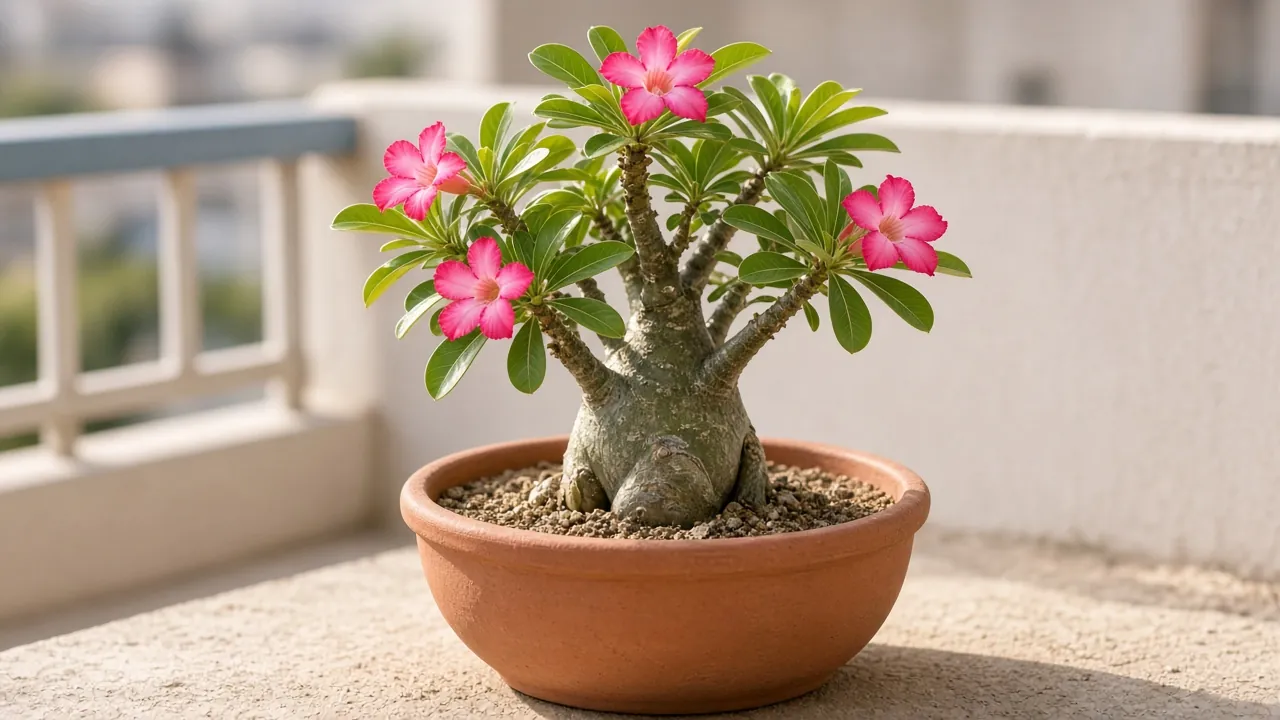
- Plant: Adenium obesum (desert rose). A sun-loving succulent with a swollen stem, the caudex — not a low-light houseplant.
- Light: at least 6 hours of direct sun in the growing season. Outdoors on a sunny patio or balcony is best; indoors, only a very bright south or west window comes close.
- Winter, temperate climates: this is the rule that matters. Bring the pot inside before nights fall to about 55°F (13°C). It cannot take frost. Let it go dormant, and water very little.
- Mix: a wide pot with large drainage holes and a sandy cactus-and-succulent mix. Ordinary potting soil stays too wet.
- Safety: milky sap is irritating and the whole plant is toxic if eaten. Wear gloves to prune; keep it away from children and pets.
In this article
Desert rose is often sold as a “houseplant,” which is only half true. In a warm, frost-free climate you can keep it in a pot on a sunny patio almost all year. In the United States, the UK, and much of Europe, it is a summer outdoor plant that comes inside for winter, then goes back out when the nights are warm. If you treat it like a pothos on a bookshelf, it will stretch, drop leaves, and never flower. This guide is about growing it well in a pot — including the indoor months it needs in a temperate apartment.
Be honest about sun before you buy the pot
Adenium wants full sun: on the order of six hours of direct light a day when it is growing. Count actual sun patches on the balcony or windowsill, not how bright the room feels.
In the Northern Hemisphere, a south window is the strongest, then west. East is milder. A north window is usually too weak for this plant. (In the Southern Hemisphere the sunny window is the north one; do not copy that here.) Even a south window is a compromise compared with an outdoor summer placement. If your only indoor option is a dim court-yard exposure, desert rose is the wrong plant.
A plant that spent winter indoors cannot go straight back into full July sun. The leaves will scorch. Ease it out: a few days of morning sun, then more, until it can sit in the open.
Pot, mix, and how to plant
Choose a pot that is wider than it is deep, with generous drainage holes. The caudex wants room to thicken, and a deep, narrow pot holds a wet column of mix at the bottom. Terracotta dries faster than plastic, which helps if you tend to overwater.
Use a fast-draining cactus and succulent mix, or make one: roughly equal parts of a light potting mix, coarse horticultural sand or grit, and perlite or fine gravel. Do not use a peat-heavy indoor mix on its own. A little gravel in the bottom is fine if it keeps the holes from clogging; it is not a substitute for a porous mix.
To pot or repot:
- Work in spring or early summer, when the plant is waking up, not in the middle of winter dormancy.
- Slide the plant out and crumble away old, packed or sour soil. Cut only roots that are black and soft, with clean tools, and let cuts dry for a short time.
- Set the plant so the caudex sits slightly higher and more visible than it was, about an inch (2–3 cm) if the plant is already established. Burying the caudex deeply traps moisture against the stem. Do not strip all the roots bare on the first repot; expose a little at a time.
- Fill in with mix, tap the pot to settle it, and do not pack it down.
- If you cut roots, wait a day or two before watering. Then water just enough to settle the mix, drain it, and wait until it is nearly dry again.
Wear gloves. The sap is milky and can irritate skin and eyes.
The temperate-climate year: summer outside, winter inside
This is where an English-language guide has to diverge from advice written for Brazil, where many balconies stay warm all year.
Late spring and summer. Once nights stay reliably above about 55°F (13°C), move the pot to the sunniest outdoor spot you have — a balcony, a patio, a fire escape that gets sun (where it is allowed and safe). Water thoroughly when the top 1 inch (2–3 cm) of mix is dry, and empty the saucer. In a heat wave a small pot may need water more than once a week; in a cool, cloudy spell, much less. Feed lightly, with a cactus fertilizer or a bloom-oriented fertilizer at a low dose, every three to four weeks only while the plant is in active growth.
Fall. Watch the night temperature, not the calendar. When nights approach 55°F (13°C), bring the pot inside. A short dip is better handled early than a surprise frost. Desert rose is generally hardy only in about USDA zones 11–12; everywhere else, the pot is its winter insurance.
Winter indoors. Give it the brightest window you have, ideally south. Growth will slow or stop. Many plants drop some or all of their leaves; that can be normal dormancy, not a death sentence. Cut watering back hard. A large pot may need little or no water for weeks; a small one might get a light drink only when the caudex starts to look slightly soft, and even then, sparingly. Warm, dark, and wet is the combination that rots the stem. A cool, bright, dry rest is safer than a stuffy living room far from the glass.
Late winter and spring. Resume regular watering only when you see new growth and the room or the forecast is warm again. Then start the gradual move back outdoors.
Do not copy a “water two or three times a week” routine from a tropical-climate article through a northern winter. That advice assumes heat and long days you do not have from November to March.
Watering, flowers, and pruning
In growth, soak and drain, then wait. In rest, almost dry. A firm caudex is a good sign; a soft, discolored caudex, especially with a wet mix, points to rot. If rot has started, the only chance is to cut back to clean, dry tissue and start again in fresh mix — and it does not always work.
Flowers come on a plant that has sun, warmth, and a winter rest followed by a strong growing season. Indoor-only plants in weak light rarely bloom well. Prune in the growing season, not as you carry it inside for winter. Pinch or cut long, skinny shoots just above a node to encourage a branching crown and more flower sites. Use clean tools, let the cut dry, and keep the sap off your skin.
A plant that is beautiful and not safe to chew
Every part of Adenium obesum is poisonous if swallowed, and the sap can cause contact dermatitis. The toxic compounds include cardiac glycosides. This is not a casual “may upset a stomach” warning. Keep the pot where children and pets cannot chew it, glove up for pruning, and wash tools. If someone eats part of the plant, or sap gets in the eyes, get medical or veterinary help. This article is not a treatment guide.
FAQ
Can desert rose live indoors all year?
Only in a very sunny window, and even then it usually grows and flowers better with a summer outdoors. In a typical north-facing apartment, it will not thrive. It must come indoors for winter anywhere that frosts.
When do I bring it inside?
Before night temperatures settle around 55°F (13°C), and certainly before frost. Do not wait for the first hard freeze.
Why did all the leaves drop?
A dry, bright winter rest often includes leaf drop. Check that the caudex is still firm and the mix is not wet. New leaves should return when warmth and watering resume. A mushy caudex is a different problem: rot.
How often do I water in winter?
Much less than in summer. Let the mix stay nearly dry. When in doubt, wait.
What potting mix should I use?
A sandy, fast-draining cactus and succulent mix in a pot with open holes. Regular indoor potting soil holds too much water, especially in a cool room.