
Quick start
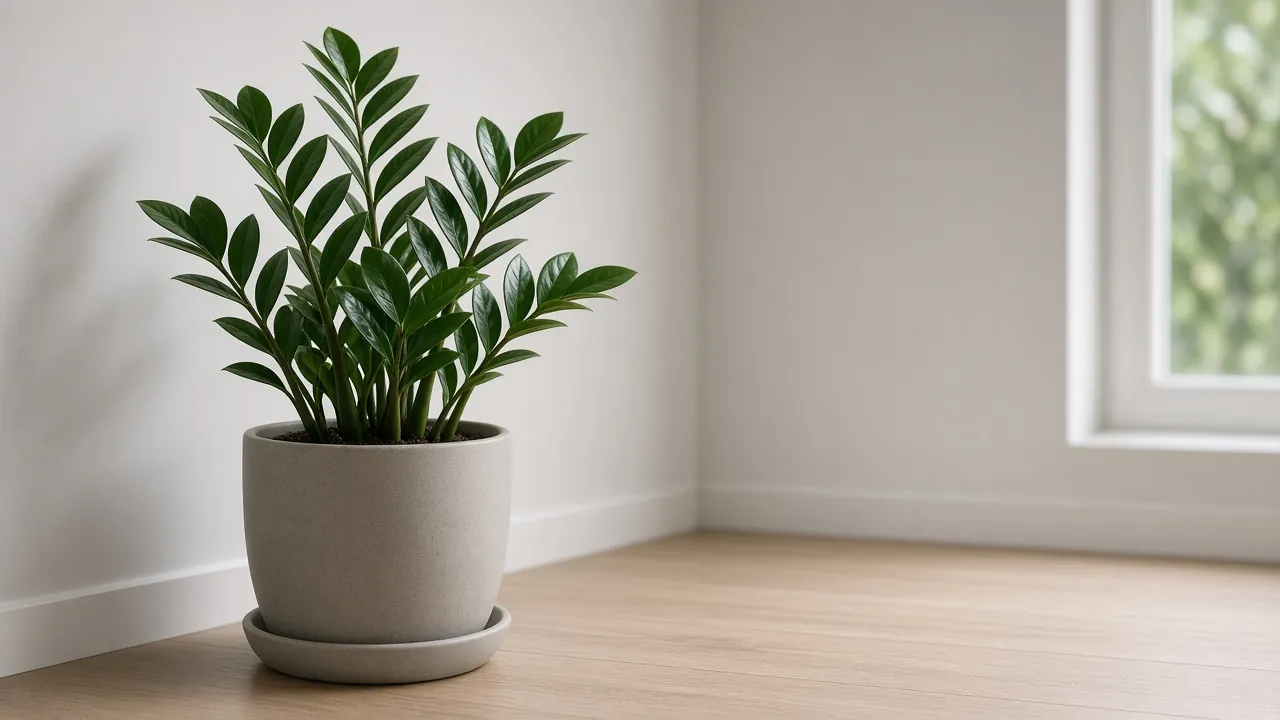
- Plant: Zamioculcas zamiifolia (ZZ plant). It stores water in underground rhizomes, so it forgives missed waterings — not a wet saucer.
- Light: bright, indirect light is best. It tolerates lower light for a while; a windowless bathroom is not a permanent home.
- Pot and mix: a pot with drainage holes and a light, fast-draining mix. Empty the cachepot after every watering.
- Water: only when the mix has gone dry. If you are unsure, wait. Overwatering is how most apartment ZZ plants die.
- Winter: growth slows under short days and heating. Water less, and keep the pot off radiators and vents.
- Safety: toxic if chewed (calcium oxalate). Keep it away from pets and small children.
In this article
The ZZ plant is sold as the apartment plant you cannot kill. That pitch is what gets it into living rooms, and it is only partly fair. ZZ will put up with irregular care, a dim corner, and a week away from home. What it will not put up with is kindness in the form of weekly watering, a pot with no hole, and a saucer that is never emptied. This guide is about potting and placing a ZZ in a real apartment — including dry winter heat and the difference between “low light” and “no light.”
Low light is not the same as no light
ZZ comes from seasonally dry, shaded habitats in eastern Africa. The thick rhizomes and waxy leaves are why it can wait out drought and why it looks fine in less sun than a succulent on a sill. Bright, indirect light is still where it grows best: firm stems, deep glossy leaflets, slow but steady new shoots.
It will also tolerate a darker room, which is where the marketing gets ahead of the plant. In very low light it grows even more slowly, the stems may thin out, and a plant that has looked “fine” for a long time can decline quite suddenly. A practical map of an apartment:
- Next to a window with filtered light, out of harsh midday sun: the best spot. In the Northern Hemisphere, east is gentle; a south or west window is fine if the plant sits a little back or behind a sheer curtain; a north window is the weakest and may be enough only if it is unobstructed.
- A few feet (about a meter) from a bright window: usually acceptable, with slower growth.
- A windowless bathroom or an interior hallway: a short stay, not a long-term home. Rotate the plant to a brighter room or pick a different species.
- Direct, hot sun on the leaves: can bleach, curl, or scorch them. Move it back.
Do not use a ZZ as a reason to ignore light altogether. It is tolerant, not a plastic prop.
Pot, mix, and how to plant
The pot must drain. Terracotta dries a little faster than plastic, which helps if you overwater. Choose a container only slightly wider than the clump of rhizomes; a huge pot stays wet for too long. A decorative cachepot is fine as a sleeve, as long as the inner pot comes out to drain and goes back into a dry saucer.
Use a light, well-draining houseplant mix, loosened with perlite or coarse sand. Dense garden soil and moisture-control mixes that stay wet for days are a poor match. A little gravel at the bottom can keep holes from clogging; it cannot fix a mix that already holds too much water.
To pot, or to divide a crowded plant:
- Tip the plant out. Push from the base of the pot; do not yank the stems. The rhizomes take up more room than you expect.
- Check them. A healthy rhizome is firm and pale to yellowish. Soft, dark, foul-smelling tissue is rot: cut back to clean flesh with a sterile tool and let the cut dry in the shade for a short time.
- To divide, pull or cut the clump so each piece has at least one firm rhizome and a stem or two. You do not have to divide on the first potting; do it when the plant is packed or when you want extra plants.
- Set the rhizomes in a shallow bed of mix so they are covered, but do not bury the stems deeply.
- Fill in, firm just enough that the plant stands, and do not compact the mix.
- If you cut rhizomes, wait a day before watering. Then water until it drains and empty the saucer. If you only moved an intact plant, a modest watering to settle the mix is enough — and the next one waits until the potting mix is dry.
Dusty apartment air dulls the leaflets. A wipe with a soft damp cloth does more for the look of the plant than frequent fertilizer.
Watering in a heated apartment
Let the mix dry before you water again. Test a few inches (several centimeters) down, not just the crust. When in doubt, wait. The rhizomes are a reservoir; a late watering is safer than a wet week.
A calendar (“every two weeks,” “once a month”) fails in apartments because drying time changes:
- In a warm, bright room in summer, a small pot may dry in a week or so.
- In winter, heating dries the surface while the bottom can stay wet, especially in plastic. Check deeper, and keep the pot out of the direct blast of a radiator, baseboard heater, or vent. Growth slows in short days; water less — sometimes much less, closer to monthly in a cool, low-light room.
- Air conditioning in summer has a similar effect at the surface. Again, trust the mix, not the date.
Water with tepid, room-temperature water until it runs out of the holes, let it drain, and return the pot to a dry cachepot. Do not leave the plant standing in runoff “for humidity.” ZZ does not need misting.
Feed sparingly. This is a plant of lean, sandy soils. A standard houseplant fertilizer at half strength, once or twice between spring and early fall, is enough. Skip fertilizer in winter, and skip it on a plant you have just repotted or one with damaged rhizomes.
Yellow leaves, soft stems, and the long, quiet decline
Most ZZ problems in apartments start with water, not with a lack of plant food.
- Yellowing lower leaves and a pot that is still damp: too much water. Stop, check drainage, and if a rhizome is soft, repot and cut the rot.
- Stems that collapse at the base: serious rot. Act quickly or the whole plant can go.
- Pale, patched, or crispy leaves: too much direct sun.
- No new growth, thinning stems, years in a dark corner: not enough light. Move the plant before you “help” it with more water or fertilizer — both make a low-light plant worse.
- A plant that seemed invincible and then failed all at once: this happens when a ZZ has been kept in very poor light or in chronically wet mix for a long time. It endures, then it does not. Change the conditions; do not wait for a dramatic warning.
Keep it out of easy reach of pets and kids
ZZ plants contain calcium oxalate crystals. If a child or a pet chews a leaf or a rhizome, mouth irritation, drooling, and vomiting can follow. It is not the same kind of toxicity as desert rose, but it is not a floor plant next to a food bowl either. If something is swallowed, call a doctor or a veterinarian. This article is not a treatment guide.
Skip claims that the plant will purify the air in a way that matters for health. What it actually offers in an apartment is a calm, architectural plant that asks for restraint with the watering can.
FAQ
Can a ZZ plant live in a bathroom?
Yes, if the bathroom has a window or another real source of daylight. An interior, windowless bath is a poor permanent home.
How often should I water a ZZ plant?
Whenever the mix has dried, which may be every week or two in a bright summer room and much less often in a heated, low-light winter. The pot, not the calendar, decides.
Why are the leaves turning yellow?
In apartments the usual cause is overwatering. Check the saucer and the mix before you assume it needs fertilizer or more sun.
Can I grow it in water?
People sometimes root a cutting in a jar as an experiment. A mature plant belongs in a draining pot of mix, not in a standing vase.
Is it a true low-light plant?
It is low-light tolerant, which is not the same as low-light loving. It looks and lasts better in bright, indirect light, and it will not thrive forever in a dark interior room.
